
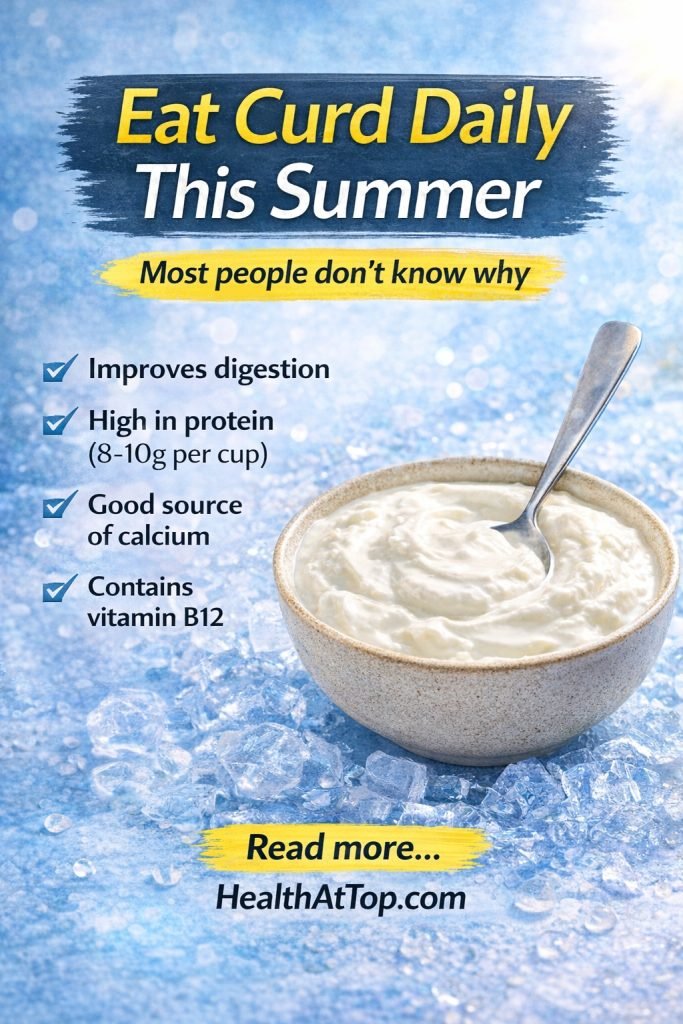
I think curd is genuinely helpful for most people especially if they are looking for something simple to add to your daily routine. It does has real benefits that are pretty easy to take advantage of but note its still not some miracle food.
Curd works well as part of regular diet. Helps with digestion if it’s fresh, provides protein and calcium & might be easier on stomach if you’re mildly lactose intolerant. Just don’t expect it to be your only source of nutrients or assume all store bought varieties offer the same benefits.
Top 5 Benefits of Curd –
1. Digestive Health and Probiotics
Curd has live bacterial cultures in it. The main ones are Lactobacillus bulgaricus and Streptococcus thermophilus. Just one gram of fresh curd can have anywhere from 100 million to 1 billion colony-forming units of bacteria, which sounds like a lot because it is. These probiotics helps in restoring gut bacteria balance, especially when one is on antibiotics. Studies show they can actually reduce how long diarrhea lasts by about a day in acute cases.
Here’s something worth knowing though. Heat treated or pasteurized curd products don’t work the same way. The bacterias are dead. No probiotic benefit at all. Homemade curd also loses its bacterial potency after sitting in the fridge for 3 to 4 days, so freshness matters more in its case.
A lot of commercial curd gets labeled “heat treated after culturing” and that means no live cultures. People assume all curd is probiotic-rich but that’s just not true.
In South Asian countries primarily in India, it’s pretty common to eat curd with rice when your stomach’s upset. Some people take it daily with meals because they believe it helps digestion & honestly they are not wrong if they are using fresh curd.
2. Protein Content
Curd gives around 3 to 4 grams of protein from 100 grams of full-fat curd. That’s complete protein with all the essential amino acids our body needs. The bacterial action breaks down the protein, which can help some people digest it easier than regular milk.
Negative Point –
Greek yogurt has way more protein, around 9 to 10 grams per 100 grams because it’s strained and curd isn’t. People started overestimating how much protein they’re actually getting from curd compared to foods that are genuinely high in protein. Most people who eat curd regularly consume about 100 to 200 grams daily. That gives you only 3 to 8 grams of protein. It’s helpful but it’s not substantial.
3. Calcium Absorption
Curd provides somewhere between 120 and 150 mg of calcium per 100 grams. The lactic acid that forms during fermentation improves calcium bioavailability a little compared to milk. Studies suggest 20 to 30% of the calcium from fermented dairy gets absorbed versus roughly 25% from regular milk, so yeah, curd is a improvement at best.
Fun Fact : There’s a misconception that curd is a calcium superfood. It’s a decent source but you’d need to eat about 600 to 700 grams every single day to meet the 1000 mg adult requirement from curd alone. That’s a lot of curd for sure. Most people eat it as part of a varied diet anyway not as their primary calcium source, which do really makes sense though.
4. Lactose Reduction
The fermentation process breaks down 20% to 30% of the lactose that’s in milk. Some people with lactose intolerance can handle curd better than milk but remember results vary a lot from person to person. About 70% of people with mild lactose intolerance can eat small amounts of curd without symptoms usually around 100 to 150 grams. Curd contains around 3 to 4 grams of lactose per 100 grams. If you have severe lactose intolerance then you’re still going to react. Those with mild intolerance often do fine with small portions. A lot of people incorrectly believe curd is lactose free and then keep asking doctors why they still get bloating and discomfort.
5. B Vitamin Production
Bacterial fermentation increases B vitamins amount in curd. Vitamin B12 content can go up by 10 to 30% and folate by 20 to 50% compared to the original milk. You get roughly 0.5 micrograms of B12 from 100 grams, which is about 20% of what you need daily plus 10 to 15 micrograms of folate.This only works with curd made from animal milk. Some people believe curd is a solid B12 source for vegetarians but for solid amount to reach you would need over 500 grams daily to actually meet your requirements and finally that’s just not practical for most people.